
RWA Markets on Polymarket: Real Estate and Commodities Without Owning Assets
How prediction market insights on real world assets work on Polymarket and why this is becoming a key entry point for new traders.

RWA Markets on Polymarket: Real Estate and Commodities Without Owning Assets
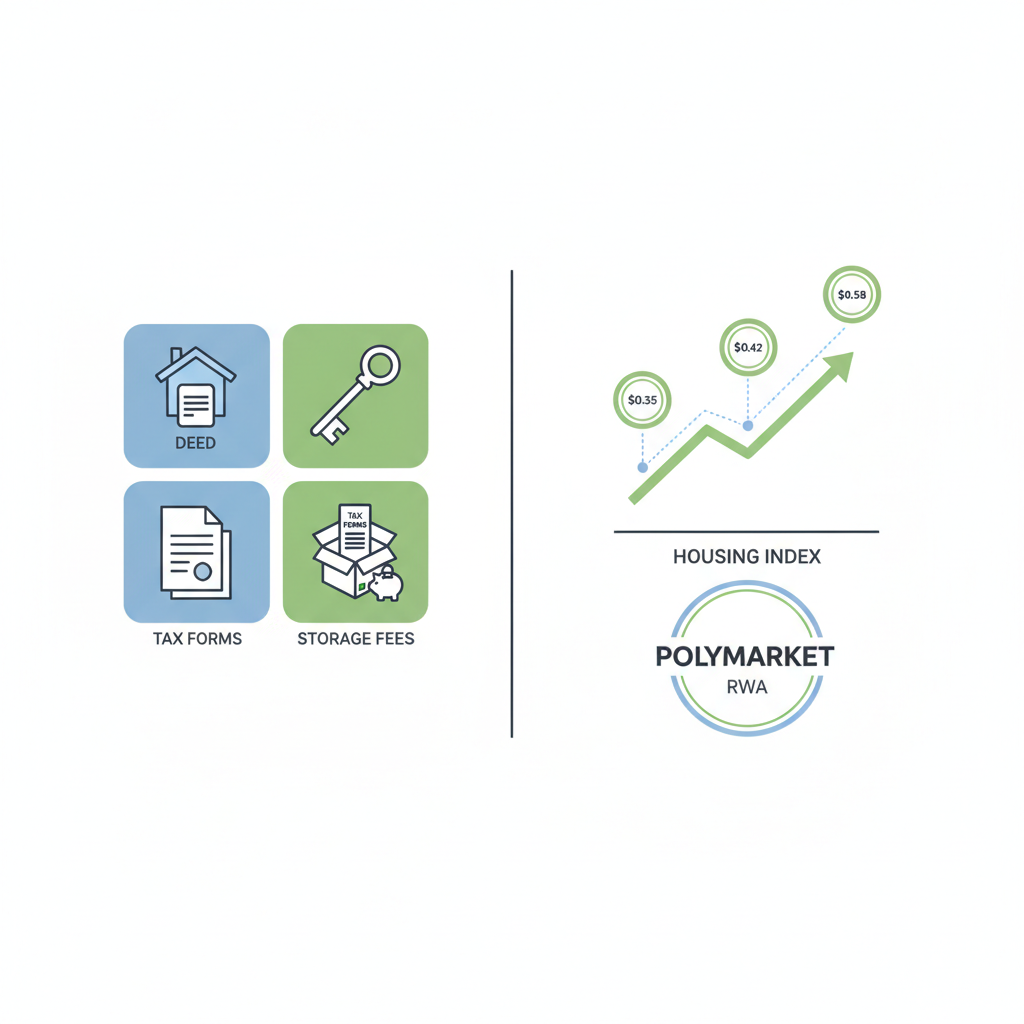
Traders keep finding ways to bet on housing spikes and oil swings through Polymarket without ever touching a deed or a barrel. These event prediction markets give direct exposure that skips the usual headaches of down payments, storage, and insurance.
By the time you finish this, you will see exactly how the RWA contracts work, where the real advantages sit, and how to fold them into your own approach without overcomplicating things.
How Real-World Asset Markets Actually Work on Polymarket
Real-world asset markets on Polymarket link yes-or-no shares straight to outside numbers like housing indices or commodity settlement prices. The outcome depends on data from sources such as Parcl for real estate or official exchange prints for commodities. You never take delivery of anything physical.
That changes the whole equation compared with buying property or futures. Instead of lining up financing and paying ongoing costs, you just trade shares that move between a penny and 99 cents based on what traders think will happen next. A quick move in the underlying index can produce solid percentage returns on a small stake because the pricing reacts instantly to fresh information.
Polymarket now runs well over a thousand active markets and has cleared more than three billion dollars in total volume. The growth shows these platforms have moved past election bets into contracts that let everyday traders take targeted positions in asset prices.
Polymarket Trading Insights: Stepping Into Real Estate and Commodities
Markets start when someone proposes a clean rule and names the data source that will settle it. Real-estate contracts often pull daily numbers from the Parcl partnership that began in early 2026. Commodity markets simply watch settlement prices used by traditional exchanges. Once the numbers cross the strike on the chosen date, shares pay out automatically.
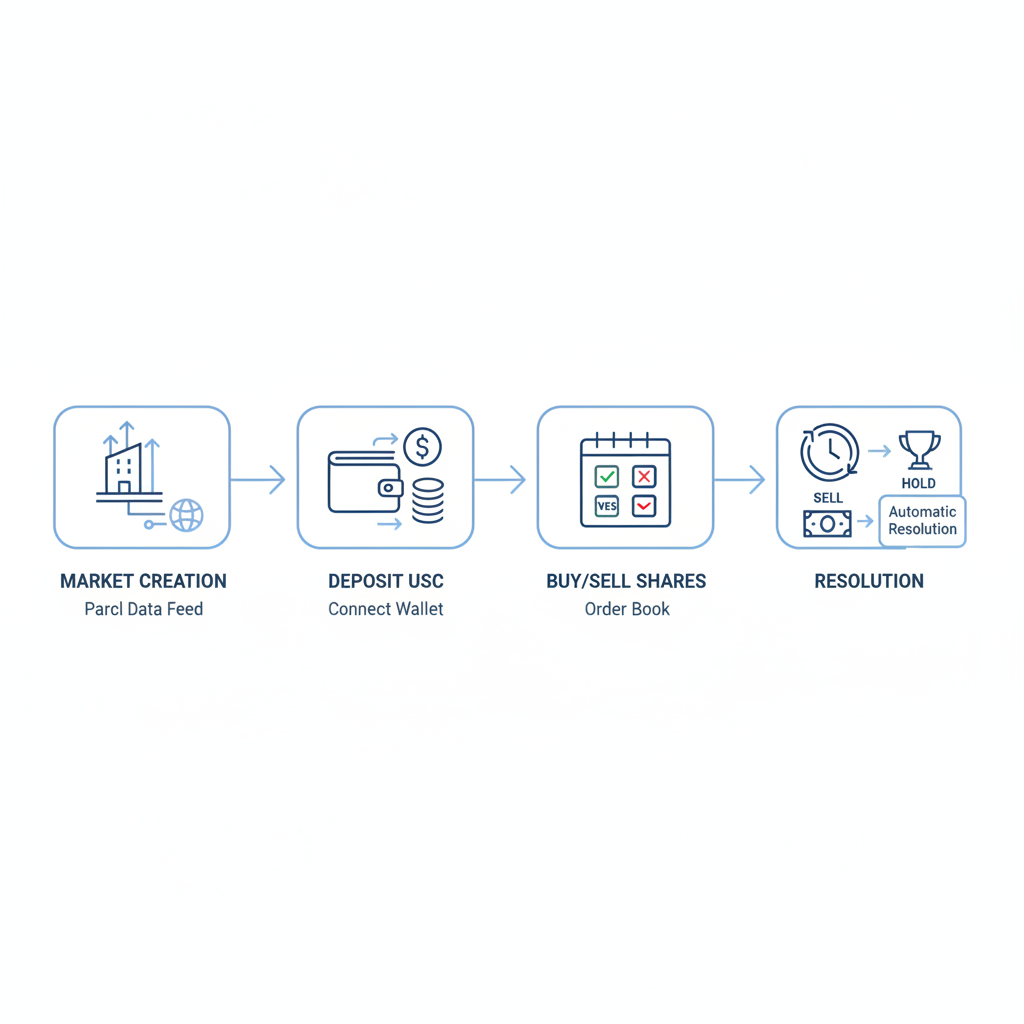
Getting started takes a wallet and some USDC. You connect, look at the order book, and buy or sell shares at the current price. Liquidity providers keep the bigger markets from swinging wildly on single trades. Housing-related contracts continue to see activity across multiple cities as new data feeds come online.
The same simple flow works for commodities. You can take a position in a couple of minutes and close it out later by selling your shares to someone else, all before the resolution date arrives.
What Traders Actually Gain From These Markets
The biggest practical win is skipping every carrying cost that comes with real ownership. No property taxes, no warehouse fees, no margin calls beyond the money you already put into shares. Because shares cost less than a dollar, anyone can size a position to fit their account instead of needing six figures to start.
Markets stay open every day. With hundreds of thousands of active users, popular RWA contracts keep trading on weekends when stock and futures exchanges are dark. That constant access means you can react to news the moment it hits instead of waiting for Monday morning.
Together these features drop the barrier for anyone who has a view on where home prices or commodity values are headed. You put in a modest amount of stablecoin, watch the shares move, and exit whenever you like without lawyers or title companies involved.
Risks That Still Matter
Not every contract trades with tight spreads. Smaller RWA markets can move several cents on a single larger order, so timing entries and exits takes more care. Data delays or ambiguous readings can also spark disputes, though the platform has settled the vast majority of markets cleanly so far.
Smart-contract bugs and policy changes remain background concerns. Polymarket has already added identity checks in some regions after regulatory pressure, which can limit access depending on where you live. Reading the exact resolution rules posted in each market helps avoid surprises before you commit size.
Why Transparency Still Counts in Forecasting Markets
Every trade sits on-chain where anyone can check the details with a block explorer. Wallet addresses, prices, and timestamps stay public, which makes large-scale manipulation harder to hide. Resolution sources get named upfront, and any disputes follow a published process that lets the community look at the evidence.
The team releases regular reports on how markets closed, including the occasional edge case. That record lets traders verify outcomes themselves instead of taking the platform’s word for it.
Where Things Are Headed Next
The Parcl integration opened the door to broader index markets instead of single-city bets. Additional data providers keep adding coverage across more metros, which should bring even more contracts online. Liquidity programs aimed at institutions have started to deepen some of the thinner books, and clearer rules in a few jurisdictions are giving the platform room to add new asset types while staying compliant.
More variety usually means better opportunities for traders who want exposure without the operational load of owning the assets themselves. The real test will be whether volumes in these RWA contracts keep growing as the selection expands.
Prediction market insights from these markets keep showing that forecasting markets can deliver straightforward exposure to real estate and commodities. Try a small position in one or two contracts that match your own outlook and see how the mechanics feel before scaling up.
Explore more topics
Related Articles

Polymarket Weather Markets: Hong Kong Temperature Forecast Trading Examples and Profits

Polymarket Combinatorial Positions Explained With Real Examples

Polymarket Wallet Incident: Internal Key Management Risks Explained