
Polymarket Wallet Incident: Internal Key Management Risks Explained
Breakdown of the recent Polymarket wallet security issue and practical steps traders can take to protect funds when using prediction market platforms.

Polymarket Wallet Incident: Internal Key Management Risks Explained
The Polymarket wallet incident sent shockwaves through the prediction market community. Even sophisticated platforms can trip over internal key management failures, and traders started questioning whether their positions were truly safe.
What Happened in the Polymarket Wallet Incident?
On May 22, 2026, an internal wallet tied to Polymarket lost $700,000 in POL tokens. On-chain tracking showed the funds moved rapidly across 16 addresses at a pace of 5,000 POL every 30 seconds. Reports surfaced within hours. The platform's engineering lead clarified the event as a private key compromise of a wallet used for internal top-up operations, not contracts or core infrastructure.
Initial coverage described the event as an infrastructure-level breach, yet confirmed details pointed to a narrower failure limited to one operational wallet. This distinction set the incident apart from typical exchange hacks that target user holdings or smart contracts directly. User funds and market resolution mechanisms remained unaffected, which limited immediate damage to traders but still highlighted how operational wallets can become single points of failure.
How Did the Private Key Compromise Occur?
The breach stemmed from a private key compromise of an internal wallet used for reward payouts rather than any smart contract exploit. Internal access controls and human factors played central roles, since the wallet handled routine top-up operations that required ongoing key availability. Weaknesses in key storage or rotation practices allowed the compromise to bypass standard security layers that protect user-facing systems.
Attackers moved the stolen POL across 16 addresses before routing portions through centralized exchanges, a pattern that complicates recovery. The speed of the drain suggests automated execution once the key was obtained. This type of incident reveals how internal operational wallets often receive less stringent segmentation than contracts or user custody solutions.
Polymarket's Response and Security Upgrades
Polymarket responded by rotating keys for backend services and investigating internal secrets that might have been exposed. The engineering lead's statement emphasized that the affected wallet supported internal top-up operations only, which helped contain the scope. These actions addressed the immediate vector while the platform reviewed broader access procedures.
New monitoring protocols now track unusual activity on operational wallets more closely. Still, platform-level fixes cannot eliminate every internal key risk for individual users. Traders must recognize that even after these upgrades, operational wallets remain necessary for platform functions such as reward distribution and therefore retain some exposure.
How Polymarket Works and Where Internal Risks Hide
Polymarket's wallet architecture separates user-controlled keys from those held for internal operations. Users interact through wallets they control, while the platform maintains separate keys for functions like reward payouts and liquidity management. Prediction markets create unique custody challenges because frequent settlement and reward distributions require operational wallets to hold tokens in accessible form.
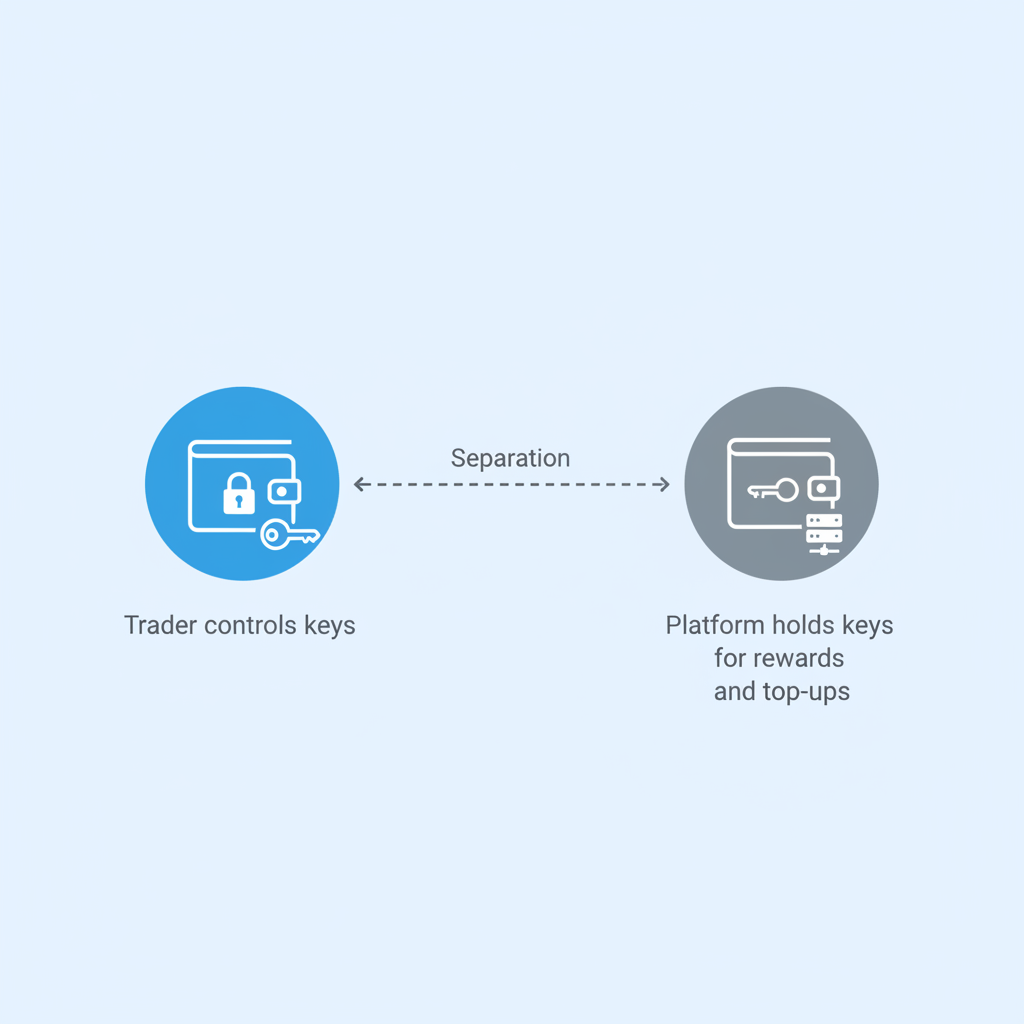
The May 22, 2026 incident illustrated how a private key compromise of an internal wallet used for top-up operations could drain $700,000 in POL without touching user balances. This separation protects traders in the short term but concentrates risk in backend systems that demand careful key hygiene.
Best Practices for Protecting Funds on Prediction Markets
Traders can reduce exposure with a few straightforward habits. Segment keys across multiple wallets and avoid reusing long-lived operational credentials. Monitor on-chain data for sudden large movements from platform-linked addresses. Use hardware wallets for personal positions and withdraw after significant gains. Run small test transfers before moving larger amounts. Regularly review on-chain activity around internal addresses.
These steps do not eliminate platform risk but shift more control to the individual. Many traders already keep a separate wallet just for testing new markets or pulling profits, which adds a simple layer of protection without much extra effort.
Using Polymarket Signals and Data Securely After the Incident
Evaluating signal reliability after the breach requires checking whether data sources reference on-chain movements from known internal wallets. Incorporating security checks into daily polymarket data review means watching for unusual distribution patterns, such as rapid splits across multiple addresses. Traders can maintain their edge by treating security verification as part of normal analysis rather than an added chore.
The $700,000 POL drain at 5,000 POL every 30 seconds across 16 addresses serves as a concrete example of what to flag in future monitoring. Combining these habits with Polymarket's reported key rotation for backend services allows continued use of polymarket signals and polymarket data with reduced exposure. Over time, this approach turns security awareness into just another part of reading polymarket trading insights effectively.
Staying alert to these patterns does not mean avoiding the platform. It simply means treating every new piece of polymarket signals or polymarket data with the same scrutiny you would apply to any other market signal.
Explore more topics
Related Articles

Polymarket Weather Markets: Hong Kong Temperature Forecast Trading Examples and Profits

RWA Markets on Polymarket: Real Estate and Commodities Without Owning Assets

Polymarket Combinatorial Positions Explained With Real Examples