
Polymarket Combinatorial Positions Explained With Real Examples
Learn how Polymarket's new combinatorial positions function like parlays, allowing combined YES/NO bets across multiple markets with full collateralization and settlement rules.

Polymarket Combinatorial Positions Explained With Real Examples
Most people on Polymarket stick to single bets and leave real edge sitting there. Combinatorial positions change that by letting you bundle separate outcomes into one trade that only pays if everything lines up. You put up the full amount upfront, and the payout multiplies when the whole set resolves true. This guide walks through how they work, how to set them up, and how traders actually use them in polymarket analysis without overcomplicating the process.
What Combinatorial Positions Actually Are
These positions simply tie two or more independent markets together. Each market still has its own odds, but you only stake once on the combined result. If every leg hits, the smart contract pays out automatically on Polygon. No claims, no waiting on anyone else.
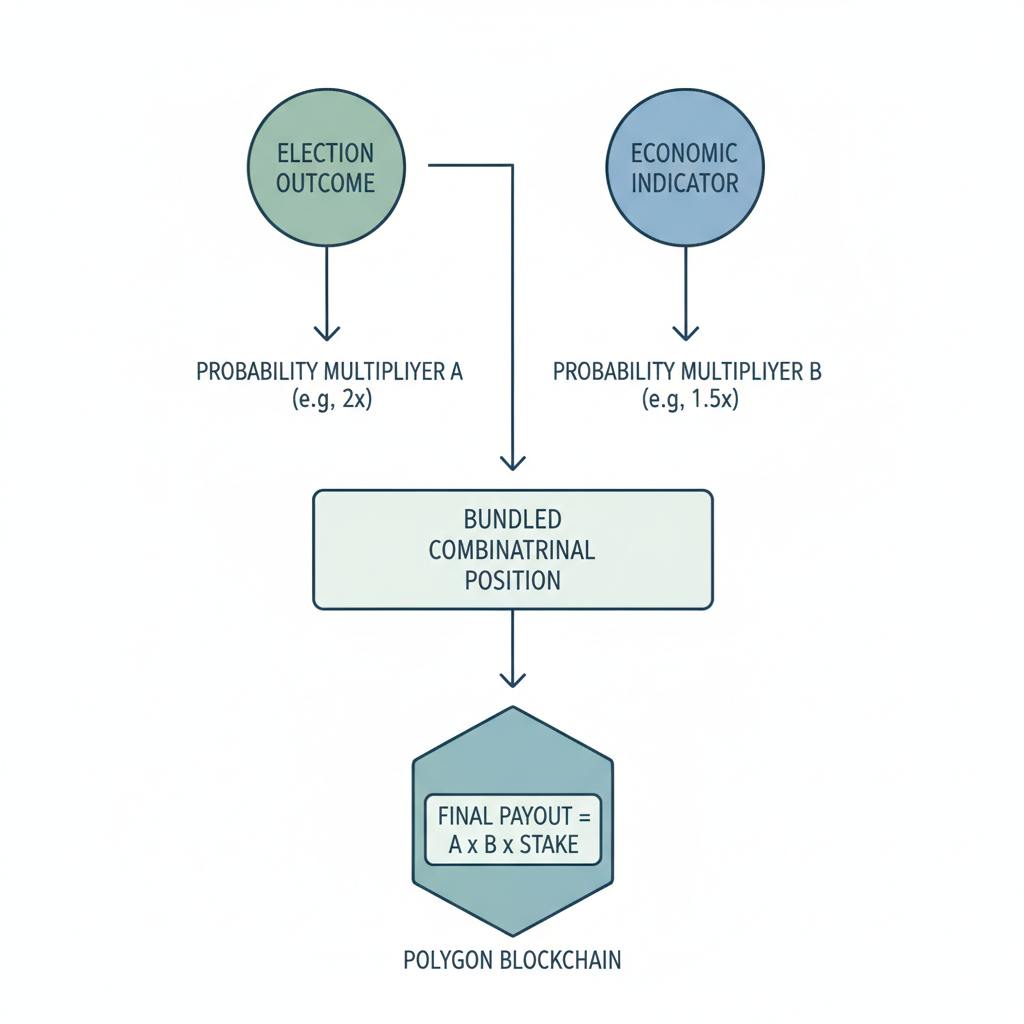
The structure keeps things straightforward because the platform already handles the math. You pick events that can happen at the same time, stake the joint probability amount, and the return scales accordingly. Daily volume often clears fifty million dollars, spiking much higher around big elections or news events, which shows plenty of traders already run these bundles at size.
Everything settles through UMA’s oracle. Outcomes get verified on-chain, and your funds stay in your own wallet the whole time. The position acts like one bet even though it captures the joint odds of multiple results.
How These Bundles Beat Traditional Parlays
Sportsbooks tack on a vig that eats 5 to 10 percent of every parlay before anything even resolves. Polymarket takes 1 to 3 percent once on the whole stake. That difference adds up fast when you stack several legs. You also keep full control until the oracle finishes its job.
Every trade and payout sits on the public blockchain, so you can check the logic yourself. No fine print changes the rules after you enter. You can still sell or adjust the position on the order book if the probabilities shift, something you cannot do with a printed parlay ticket.
Because custody never leaves your wallet, the lower fees actually show up in your results instead of getting lost in hidden costs.
How to Build a Combinatorial Position
Start with markets that make sense together and resolve on their own. Open the combination tool or place the orders manually. The interface shows the total collateral needed and what the payout would be if everything lands.
Bots like PolyParlay let you pull up to ten markets into one position. You set the legs, see the blended probability, and decide the size. The table below gives a rough sense of how returns scale with more legs, assuming the events stay independent.
| Legs | Combined Probability | Potential Return |
|---|---|---|
| 3 | 26.6% | 3.76x |
| 4 | 15.0% | 6.67x |
| 5 | 7.5% | 13.3x |
Check your balance against the collateral, then submit. The order sits until it fills. Once the oracle confirms every leg, the payout happens automatically.
Real Trades That Used Combinatorial Positions
Traders combine multiple independent outcomes into single positions to capture joint probabilities with one collateral amount.
Combinatorial approaches appear across different market categories for position management and return structuring.
Risks and How to Size These Trades
Correlation is the main trap. If two events share the same driver, a move in one probability drags the others with it. Liquidity also matters, since you may want to exit early and need someone on the other side of the order book.
Keep each combinatorial trade to a small slice of your total capital. Even when a five-leg bundle offers double-digit multipliers, oversized positions turn one wrong correlation call into a big problem. Review past resolutions on Polygon to get better at judging how often similar bundles actually hit.
Why the Transparency Matters for Ongoing Polymarket Analysis
Every order, fill, and settlement lives on Polygon in public view. You can audit the contracts and look at historical trades without asking permission. Funds never sit with a middleman, and the fee schedule stays visible from the start.
That record lets you test ideas against real data and refine your polymarket predictions over time. No hidden variables creep in, which makes it easier to repeat what works and drop what does not.
Pick two markets that feel connected, size the trade conservatively, and watch how the joint probability plays out. The mechanics stay simple once you run a few yourself.