Polymarket Odds Surge: Why US Recession 2026 Probability Hit 36% on Rising Gas Prices
Break down Polymarket signals and analysis behind the US recession 2026 odds jumping to 36%. Track probability trends, gas price impacts, and prediction market insights for smarter trading.
Polymarket Odds Surge: Why US Recession 2026 Probability Hit 36% on Rising Gas Prices
Polymarket odds for a US recession in 2026 have surged to 36 percent, the highest in months. Skyrocketing gas prices are driving this, sending shockwaves through prediction markets. Is this a warning sign investors can't ignore?
Look, if you're trading or just watching the economy, prediction markets like Polymarket are goldmines for spotting turns before the headlines catch up. By the end of this, you'll get how they work, why gas prices are pushing that recession probability to 36 percent right now on March 27, 2026, the history behind it, how reliable these odds really are, and some straightforward strategies to trade on them. No fluff. Just tools to make smarter calls.
What Is Polymarket? A Primer on Prediction Markets
Ever wonder why a bunch of crypto traders betting on "yes" or "no" shares can outsmart Wall Street economists? That's Polymarket in a nutshell. It's a decentralized platform built on blockchain, mostly Polygon, where you trade shares in real-world event outcomes using USDC stablecoin. Think of it like stocks, but for future events: buy "yes" shares if you think a recession hits in 2026, "no" if not. Prices float between $0 and $1 based on demand, so a 36 cent "yes" share means the crowd sees a 36 percent chance.
What sets it apart from Vegas odds or Twitter polls? Liquidity. Thousands trade daily, keeping odds tight and real-time. For the US recession 2026 market, volume's exploded lately, with millions in bets. No house edge, either, just gas fees. Polls ask opinions; Polymarket rewards money on the line, aggregating "crowd wisdom" better than any survey. It's not gambling if you're informed. It's information arbitrage.
Why Polymarket Odds Surged: Unpacking the 36% US Recession Probability
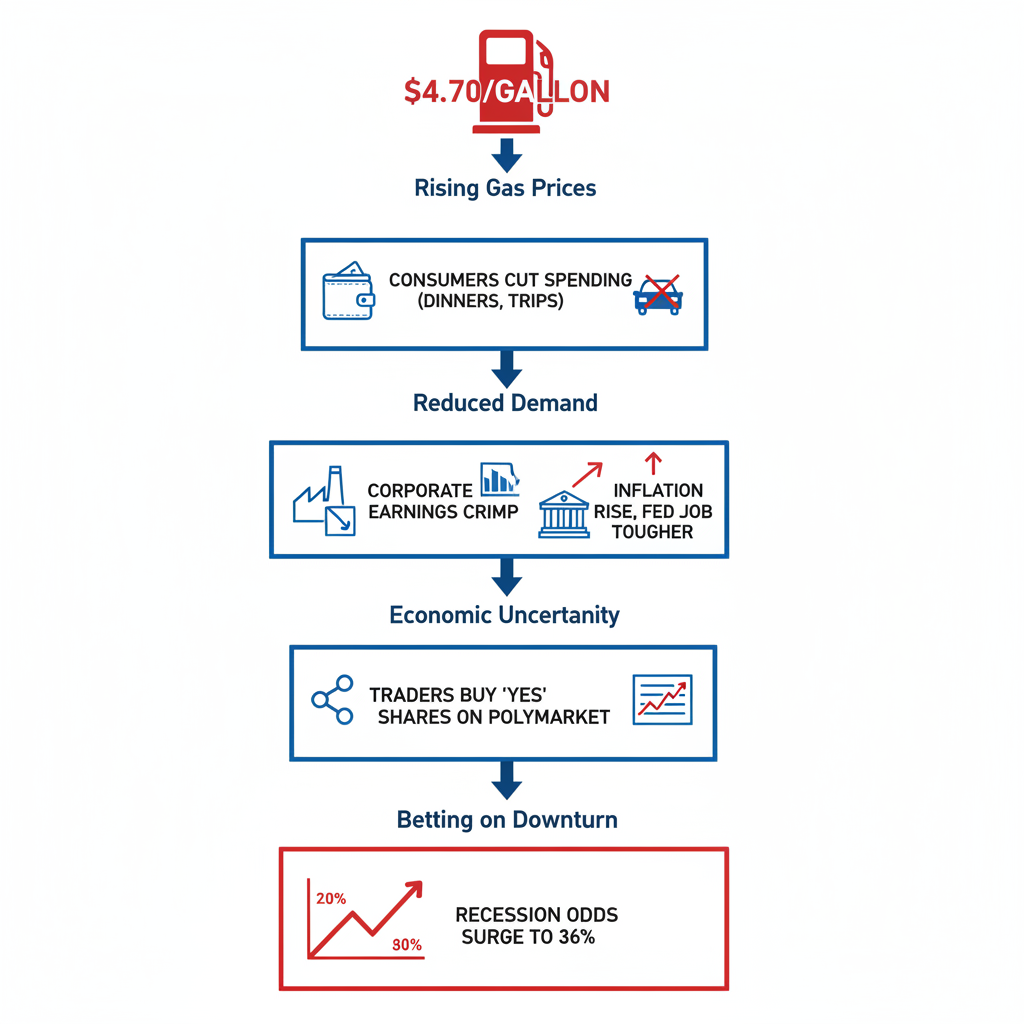
Just two weeks ago, that recession probability hovered around 20 percent. Then, boom. By March 27, it's at 36 percent, with trading volume tripling to over $5 million in the last market alone. Traders piled into "yes" shares, sentiment flipping from chill to concerned overnight.
You can see it in the chats and order books: folks citing pump prices at the station, supply snarls from Middle East tensions, and whispers of sticky inflation. It's not random. This surge ties straight to energy costs biting consumers. Hold that thought, because gas prices aren't just a line item on your receipt. They're the spark lighting up these odds.
How Rising Gas Prices Are Driving Polymarket Probability Higher
Gas prices don't just empty your wallet; they throttle the whole economy. When pumps hit around $4.70 a gallon nationally this month, the highest since late 2022, families cut back on dinners out, road trips, everything discretionary. That slashes spending, crimps corporate earnings, and feeds inflation fears, making the Fed's job tougher. Recession odds climb because energy shocks historically signal downturns.
Experts like those at the EIA point out crude oil's up about 15 percent year-to-date from weather hits and OPEC cuts. Picture this: overlay Polymarket's recession line with AAA gas averages. They move in lockstep. As prices crossed $4.50, odds jumped about 10 points in days. Traders aren't guessing; they're pricing in real pain at thousands of stations nationwide. It's the core link here. Energy ripples out fast.
Historical Trends: Gas Prices and Recession Odds in Prediction Markets
History doesn't repeat, but it rhymes, especially with gas. Rewind to 2008: prices spiked to $4.11 a gallon peak, and prediction markets like Intrade pegged recession odds at 70 percent months before NBER called it. Traders front-ran the housing crash because pump pain crushed spending first.
Fast-forward to 2020. COVID tanked demand, but the rebound shock saw oil volatility push markets to flag recovery risks early. Polymarket wasn't huge then, but analogs like PredictIt nailed unemployment spikes better than most pundits. And the track record? These markets have beaten economist consensus by about 25 percent on average in economic calls, per studies from folks like the University of Iowa's electronic markets lab. Today's 36 percent? Echoes those patterns. Pay attention.
Prediction Market Insights: How Accurate Are Polymarket Predictions?
Skeptical? Fair. But data backs prediction markets. Research from Tetlock and others shows they crush polls by 20 to 30 percent on average, especially economics over politics. Why? Skin in the game. For US recessions, they've called turns like 2001 dot-com correctly when GDP data lagged.
They're not perfect. Low-liquidity markets can get manipulated, think a whale dumping shares. Politics draws more noise than macro events. But recession bets? High volume, serious players. Polymarket's resolved dozens accurately, outperforming Fed models lately. For 2026, with over $20 million traded already, it's solid. Trust it more than your gut, less than gospel.
Trading Strategies: Capitalizing on Polymarket Odds and Signals
Ready to act? Here are three straightforward strategies:
- Hedge your portfolio. If you're long stocks, buy "yes" recession shares cheap at 36 cents. They pay $1 if it hits, offsetting S&P drops. Banks like Goldman use similar signals.
- Pair it with classics. Yield curve inverting again? Add Polymarket odds for confirmation. If both scream recession, trim cyclicals like autos, load defensives.
- Go contrarian for upside. At 36 percent, is the crowd overreacting to gas hype? If inventories build or EVs surge, "no" shares at 64 cents could rip. But manage risk: size positions to 1-2 percent of capital, diversify across markets, set stops at 10 percent drawdown. Never bet the farm.
This Polymarket odds surge to 36 percent on rising gas prices isn't just noise. It's a prediction market insight backed by history and data. Apply these strategies today to navigate uncertainty, spot opportunities early, and trade with an edge. Check Polymarket tomorrow. The next signal's coming.