Kalshi vs Polymarket on $1T Milestone Odds Comparison
Side-by-side prediction market analysis of Kalshi 90% odds versus Polymarket pricing for hitting $1 trillion valuation in 215 days and key differences in liquidity signals.

Kalshi vs Polymarket: How the Odds Differ
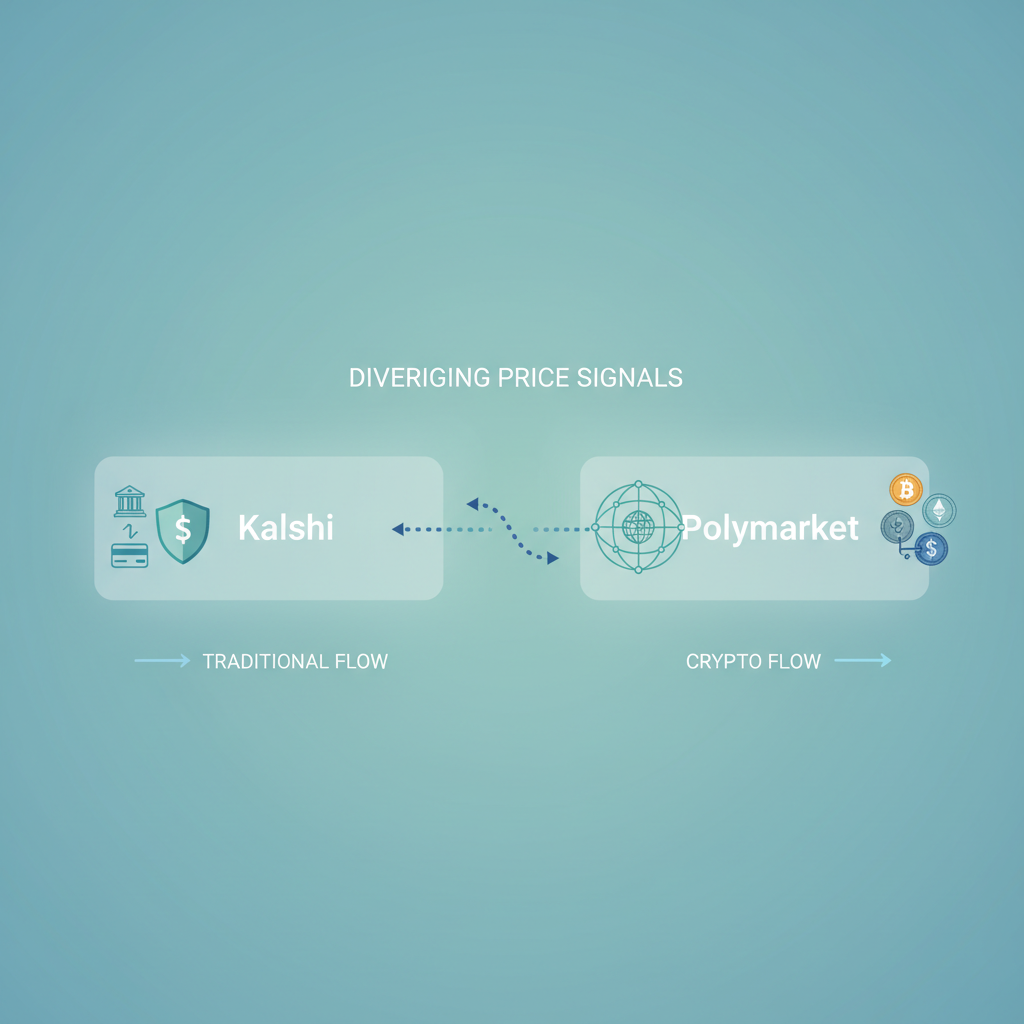
If you're watching prediction markets, the odds on Polymarket and Kalshi can differ. The gap isn't random. It comes down to who trades on each platform and how they react to events. Polymarket pulls in a global crowd comfortable with crypto, while Kalshi sticks to U.S. Users under tighter rules. That split shows up in the prices.
Time left until the market settles can make the difference bigger. When the deadline gets close, traders on each platform adjust at different speeds. The result is two separate readings on the same event instead of one clean consensus.
Where the Real Liquidity Shows Up in Crypto Prediction Markets
Look at weekly volume and you see the split right away. Kalshi hit $2.7 billion in one recent week, ahead of Polymarket's $2.1 billion. But the money moves differently. Nearly all of Kalshi's action sits in sports, so those markets stay tight while everything else stays thinner. Polymarket spreads things out, roughly 40 percent sports and the rest politics, crypto, and economics. That balance keeps more markets alive, though none get quite as deep.
Liquidity follows the same pattern. Fast news can tighten spreads on Polymarket because its users show up. Kalshi's participants often leave wider gaps in thinner contracts.
Fees and Spreads That Actually Hit Your P&L
Quoted odds only matter after you subtract what the platform takes. Kalshi charges a per-trade fee that changes by market and adds up in quiet contracts. Polymarket looks cheaper at first glance, but thin books can widen the spread enough to erase the edge. In lower-volume markets, total costs tend to vary based on liquidity.
Why Regulatory Status Changes Who Shows Up
Kalshi has been a CFTC Designated Contract Market since 2020. That gives it clear federal oversight, which pulls in desks that need compliance. Polymarket runs globally outside U.S. Rules, with its U.S. Version still in early stages. The difference decides who can play and how much size they bring.
Enforcement patterns keep the two pools separate. Kalshi draws institutions that want regulated exposure. Polymarket keeps pulling international flow and crypto-native traders who accept the extra uncertainty. You end up with two live price signals for the exact same event, each shaped by its own rule set.
Market Selection: Where Each Platform Actually Wins
Kalshi lists over 350,000 markets, mostly sports accounting for roughly 90% of trading volume. Polymarket runs about 1,000 but covers crypto events and international politics that Kalshi skips. If you want obscure leagues or niche releases, Kalshi has the depth. If the focus is token milestones or global elections, Polymarket usually has better books.
The contract itself shows the trade-off. Kalshi adds it under a slower, compliance-first process. Polymarket rolls out similar crypto-linked markets quicker. Most traders end up using both depending on what they need rather than picking one forever.
How to Pick the Right Platform Going Forward
When fast reaction to token prices and deeper crypto flow matter most, Polymarket's mix of users gives it the edge. When you want clear rules and strong sports markets, Kalshi's setup wins. Run a quick check each time: look at where volume actually sits that week, figure out how fees will hit your expected hold time, and confirm your location lets you trade there.
Good polymarket analysis starts with noticing these differences instead of chasing the single best number. The next time a big event appears on both platforms, the spread between them will tell you more about trader groups than about the odds themselves.